Josef Mengele’s exile
The Disappearance of Josef MengeleJosef Mengele’s exile was more than a prolonged evasion of arrest: it became a shrinking world in which the fugitive’s fear of capture, hostility toward the society around him, and dependence on a few protectors increasingly shaped daily life. In Brazil, the man who had escaped postwar Europe moved from a secluded retreat to a deteriorating bungalow in Eldorado. He died by drowning in 1979, never having answered in court for his crimes; decades later, his remains were placed in the hands of forensic students in São Paulo.
A Fugitive’s Retreat
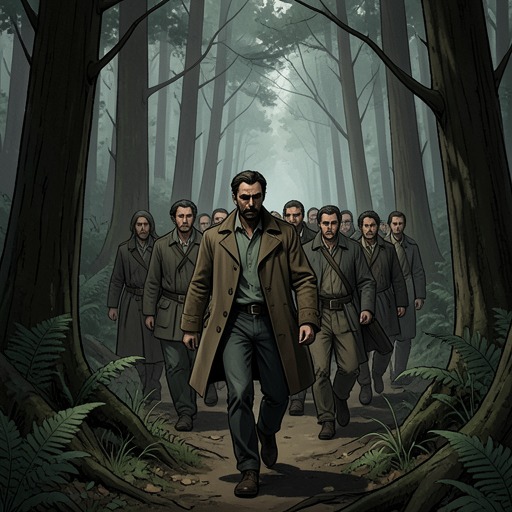
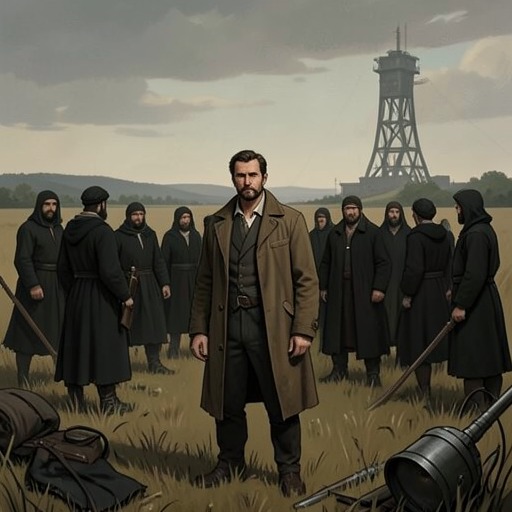
In September 1967, Mengele was living at a secluded property in Serra Negra, where he had remained since arriving five years earlier. Awake at night after reading a magazine interview with Albert Speer, he retreated to a watchtower. There, Schumann’s music played against the steady sounds of the tropical night as he turned his attention to the passing seasons and the European landscape he missed: autumn mists, November snow, spring meadows, and distant lakes. The contrast made exile feel less like a temporary refuge than an open prison, a condition from which, he understood, there was no easy escape.
His thoughts moved among cultural and personal histories. The narrative places his reflections on the untimely death of Schumann alongside the suicide of Bernhard Förster after the failure of Nueva Germania, the settlement Förster had founded with Elisabeth Nietzsche. These associations do not offer Mengele a way out; they deepen his sense of futility. He considered whether to end his life rather than continue in exile, imagining his escape as a game he was destined to lose as allies betrayed him and enemies multiplied. His fear and despair were real features of his life, but they did not amount to remorse for the people he had harmed.
By that September, the world he watched from Brazil seemed increasingly alien to him. He saw young Germans challenging inherited authority, hippies travelling from San Francisco to Kathmandu, and white Americans defending Black people. He also recoiled from postwar German art and music, interpreting its attacks on the past as a rejection of the Germany he had known. The narrative sets this reaction against the historical burden attached to his name: artists were confronting the legacy of Auschwitz and Treblinka, while Mengele remained unable to understand a world that condemned him.
Displacement and Dependence
Mengele’s later move exposed how little control his refuge afforded him. The Stammers sold their property in Caieiras and moved to São Paulo, leaving Mengele and his dog, Cigano, two months to vacate. With no independent escape route, he faced living alone for the first time since leaving Buenos Aires. He had acquired a bungalow with his share of the sale, but Geza required him to pay rent to remain there. The arrangement left Mengele with no legal recourse and made his continued shelter dependent on people with whom relations had deteriorated.
Wolfram Bossert took him to the bungalow in Eldorado, an impoverished suburb of São Paulo. The small stucco house on Alvarenga Street had mould on its walls, a cramped bathroom, a portable butane stove, and a leaking roof. The move was presented as a decisive fall from his former, more protected arrangements: the once-secluded fugitive now lived in a neglected dwelling in a crowded district. The discomfort of the house was not merely a change of address. It marked the loss of privacy and security on which his concealment had depended.
For a time, Mengele tried to improve the bungalow, beginning work on the bathroom and kitchen and installing bars at the windows. He completed little. His daily routine had lost its former structure: the early riser increasingly got up late, sometimes returned to bed, and spent long stretches alone. Cigano remained with him, while Bossert’s weekly Wednesday visits provided his most consistent company. Bossert came for dinner, listened to Bach, and heard Mengele’s recurring complaints about Germany, family, health, and the conditions of exile. Their visits offered companionship without changing the isolation that defined his life.
Prejudice, Paranoia, and Isolation
Mengele’s accounts of Eldorado revealed not only anxiety about his surroundings but also his own racism. He disparaged the neighborhood and its residents in racist and classist terms, dwelling on noise, poverty, perceived disorder, and crime. Those judgments were his, not a neutral description of the people among whom he lived. The contrast is significant: a fugitive responsible for grave crimes cast himself as the victim of a hostile environment, even as he feared the consequences of being recognized and brought to account.
His health and finances added to his dependence. He complained of high blood pressure, rheumatism, insomnia, and back problems that made walking difficult, and he feared that he might need prostate surgery. Money was short near the end of the month. Alois sent too little, while Karl-Heinz supplemented Mengele’s small pension; even the decision to buy a tape recorder caused hesitation. His relations with his family and former allies appeared in his complaints as another set of disappointments. The bungalow did not become a stable new home: recurring expenses, physical decline, and reliance on others kept his life precarious.
Fear of exposure narrowed his movements further. After he thought a man in the subway had stared at him, Mengele stopped leaving the area. He fixated on features he believed might identify him and worried that a routine trip to the grocery store could end in recognition, capture, or assault. Newspapers fed this anxiety with stories about the fugitive and reports of a reward for his capture; he also read accounts of a film that associated its Nazi dentist with the notorious doctor from Auschwitz. The gap between the public image of an all-powerful fugitive and the isolated man he had become sharpened his sense of persecution. In reality, his concealment depended on staying out of sight and on the continued help of others.
Death and Afterlife of the Exile
On February 7, 1979, while staying at a holiday home in Brazil, Mengele woke exhausted and trembling. Despite back pain, he put on his bathing trunks and went down to the beach without eating or drinking. Bossert greeted him and offered a place beneath a parasol, lemonade, and food; Mengele instead suggested that they walk along the shore. He spoke haltingly about ruins, his parents, and Günzburg, and said that he wanted to go home to spend his final days. The wish exposed the distance exile had made permanent: home existed in his speech as a place to return to, not a refuge he could reclaim.
Mengele entered the water alone and drifted farther out. When Bossert reached him and brought him back to shore, he was dead. His death ended the flight but not through arrest or a reckoning with his victims. The narrative makes that distinction central: he died in Brazil without facing human justice or giving an account of his crimes. In March 2016, his bones were bequeathed to Brazilian medicine. His remains came into the possession of forensic students at the University of São Paulo, turning the final material trace of his escape into an object of study rather than a return to the life he had lost.
The account frames Mengele’s exile within the reach of Nazi ideology beyond the war. It describes his ambition, vanity, envy, and avarice as traits that Nazism exploited and that he used to justify monstrous actions. His loneliness and fear in South America do not erase responsibility or transform him into a tragic victim. Instead, the contrast between his self-pity and the suffering he inflicted exposes the moral limit of the fugitive’s story: he escaped prosecution for decades, but neither concealment nor death can undo the crimes that gave his exile its meaning.